Nose · Gangnam, Seoul

Deviated Nose Surgery in Gangnam, Seoul

Deviated nose surgery in Seoul, Korea is a specialized rhinoplasty procedure designed to correct a crooked or misaligned nose, improve facial symmetry, and restore proper nasal function when necessary. At YUNO Plastic Surgery Clinic, crooked nose correction is customized according to each patient's nasal anatomy, structural deviation, breathing concerns, and aesthetic goals to achieve natural-looking and long-lasting results.

Deviated Nose Surgery at YUNO Plastic Surgery, Gangnam Seoul
natural, like you
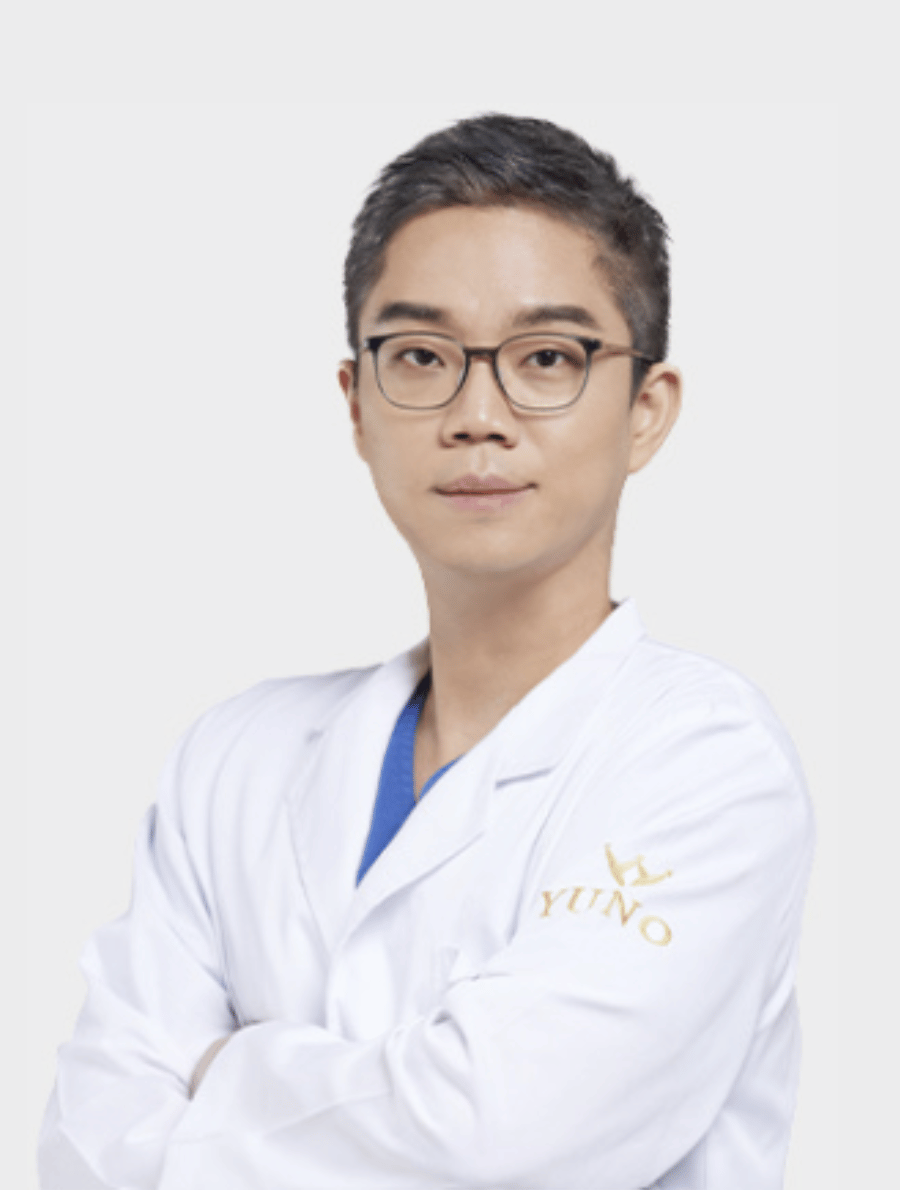
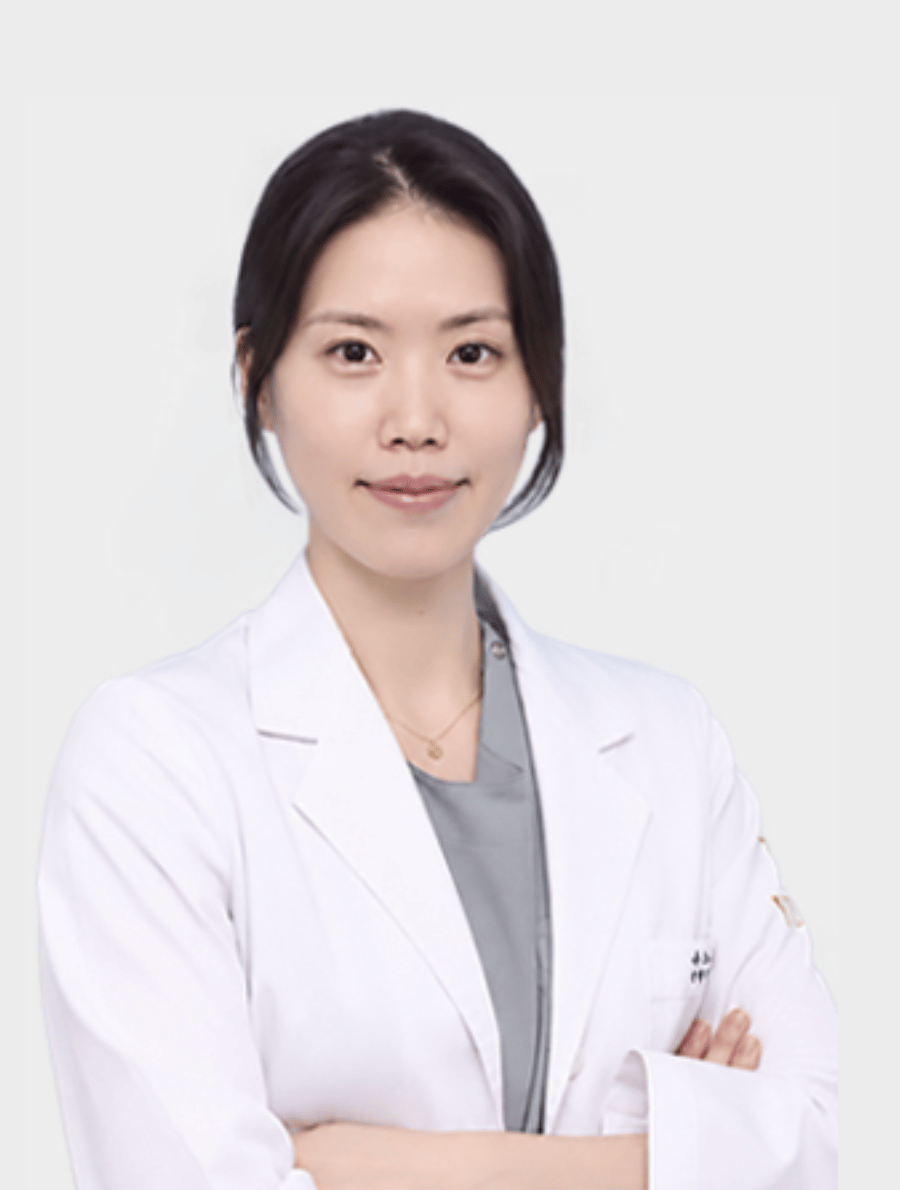
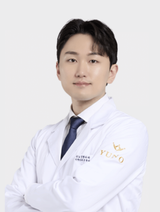
Dr. Kim Shin Young, Deviated Nose Surgery surgeon in Seoul
Dr. Kim Shin Young Nose specialist
Deviated Nose Surgery at YUNO Plastic Surgery Gangnam, Seoul
At a glance

What is Deviated Nose Surgery?

A deviated nose refers to a nose that is visibly misaligned or shifted away from the facial midline. The deviation may involve the nasal bones, cartilage, septum, or a combination of multiple structures. Some patients are born with a deviated nose, while others develop the condition after trauma, injury, previous surgery, or structural growth changes. The degree of deviation can vary significantly from one patient to another.

Procedure
Deviated Nose Surgery
Surgeons
Dr. Kim Shin Young, Dr. Joo Jae Doo
Anesthesia
Managed by a board-certified anesthesiologist on-site
Stay in Korea
Approx. 10 to 14 days (per surgeon’s advice)
Consultation
1:1 with your surgeon · English-speaking coordinators
Location
Gangnam Station Exit 10, Seoul
No. 01

Deviated Nose Surgery in Seoul Korea

A deviated or crooked nose can affect both appearance and nasal function. Even minor deviations may create facial asymmetry, while more significant deviations can lead to breathing difficulties and imbalance of facial proportions.

At YUNO Plastic Surgery Clinic, deviated nose correction focuses on restoring both structural alignment and aesthetic harmony. Every treatment plan is carefully tailored to address the specific cause and severity of the deviation while maintaining natural facial characteristics.

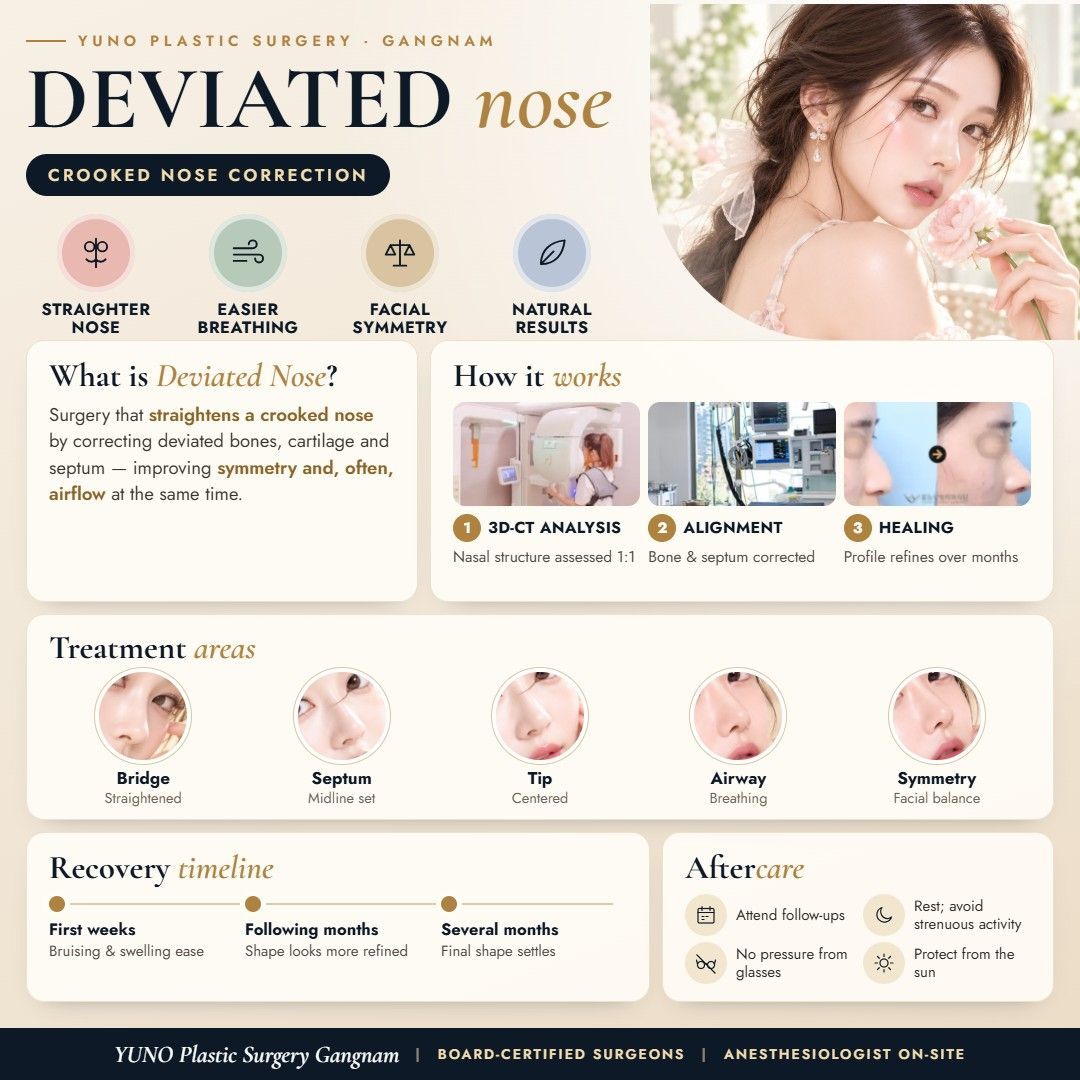
Deviated Nose Surgery infographic: what it is, how it works, key benefits, treatment areas, recovery timeline and aftercare at YUNO Plastic Surgery Gangnam, Seoul
Deviated Nose Surgery at a glance — YUNO Plastic Surgery, Gangnam, Seoul
No. 02

Common Causes of a Deviated Nose

01

Congenital Structural Differences

Some patients naturally develop a crooked nose as part of facial growth and anatomy.

02

Nasal Trauma

Sports injuries, accidents, or facial trauma can alter nasal alignment and structure.

03

Deviated Septum

Internal septal deviation can contribute to both cosmetic asymmetry and breathing difficulties.

04

Previous Rhinoplasty

Some patients develop nasal deviation following previous nose surgery and may require revision correction.

05

Facial Asymmetry

Underlying facial structure can influence how nasal deviation appears from different angles.

No. 03

Benefits of Deviated Nose Surgery

One of the primary benefits of surgery is improved facial symmetry. Straightening a crooked nose can significantly enhance overall facial balance and aesthetics.

Patients with functional concerns may also experience improved airflow and breathing. Correcting structural abnormalities can provide both cosmetic and functional improvements simultaneously.

No. 04

Deviated Nose Correction Techniques

01

Nasal Bone Realignment

Misaligned nasal bones may be repositioned to improve overall symmetry.

02

Septal Correction

Correction of a deviated septum can improve both appearance and breathing function.

03

Cartilage Reshaping

Cartilage structures may be adjusted to create a straighter and more balanced nose.

04

Structural Reinforcement

Additional support techniques may be used to maintain long-term stability and alignment.

05

Revision Rhinoplasty

Patients with previous surgical complications may require advanced revision rhinoplasty techniques.

Learn more →
No. 05

Recovery After Deviated Nose Surgery

Following surgery, patients may experience swelling, bruising, congestion, and temporary discomfort. Most visible bruising improves substantially during the first few weeks after surgery.

As healing progresses, nasal alignment becomes more refined and swelling gradually resolves. Final results continue to improve over several months as tissues settle into their new position.

No. 06

Why Choose YUNO Plastic Surgery Clinic for Deviated Nose Surgery in Seoul?

YUNO Plastic Surgery Clinic customizes every crooked nose correction procedure according to nasal anatomy, structural deviation, breathing concerns, and facial proportions. The clinic focuses on achieving natural-looking alignment while preserving structural support and nasal function.

International patients choose YUNO Plastic Surgery Clinic for personalized consultations, advanced rhinoplasty expertise, and comprehensive postoperative care. The goal is to create a straighter, more balanced nose that enhances both appearance and function.

Explore YUNO’s safety system · Meet your surgeons

Your surgeons

Who performs Deviated Nose Surgery at YUNO

Under YUNO’s real-name surgeon system, the board-certified specialist who consults with you is the specialist who operates — supported by an in-house anesthesiology team. Meet the full medical team →

Dr. Kim Shin Young, Chief Surgeon · Board-Certified Plastic Surgeon at YUNO Plastic Surgery Seoul
Kim Shin Young

Dr. Kim Shin Young

Chief Surgeon · Board-Certified Plastic Surgeon

Facial contouring, orthognathic & rhinoplasty

  • Internship & plastic surgery residency, Seoul St. Mary’s Hospital (The Catholic University of Korea)
  • Former clinical (adjunct) professor of Plastic Surgery, Seoul St. Mary’s Hospital
  • Former director, Wonjin Plastic Surgery & Romian Plastic Surgery
  • Member: Korean Society of Plastic & Reconstructive Surgeons (KSPRS), Korean Society for Aesthetic Plastic Surgery (KSAPS), ISAPS, Korean Wound Management Society
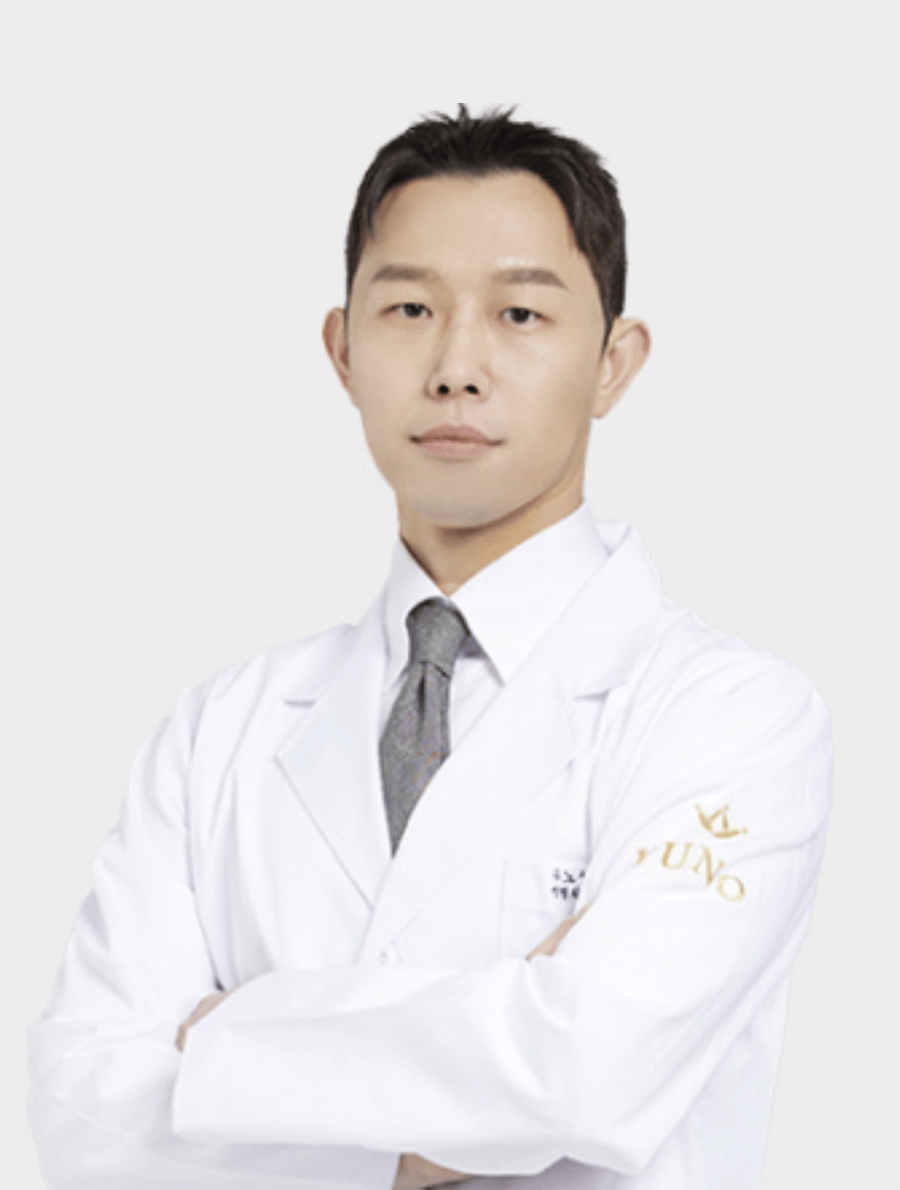
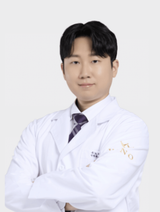
Dr. Joo Jae Doo, Board-Certified Plastic Surgeon at YUNO Plastic Surgery Seoul
Joo Jae Doo

Dr. Joo Jae Doo

Board-Certified Plastic Surgeon

Eye & nose surgery, fat grafting, body contouring & lifting

  • Former director, Dodream Plastic Surgery
  • Full member, Korean Society of Plastic & Reconstructive Surgeons (KSPRS)
  • Full member, Korean Society for Aesthetic Plastic Surgery (KSAPS)
  • Full member, Korean Cleft Palate-Craniofacial Association & Korean Society for Microsurgery
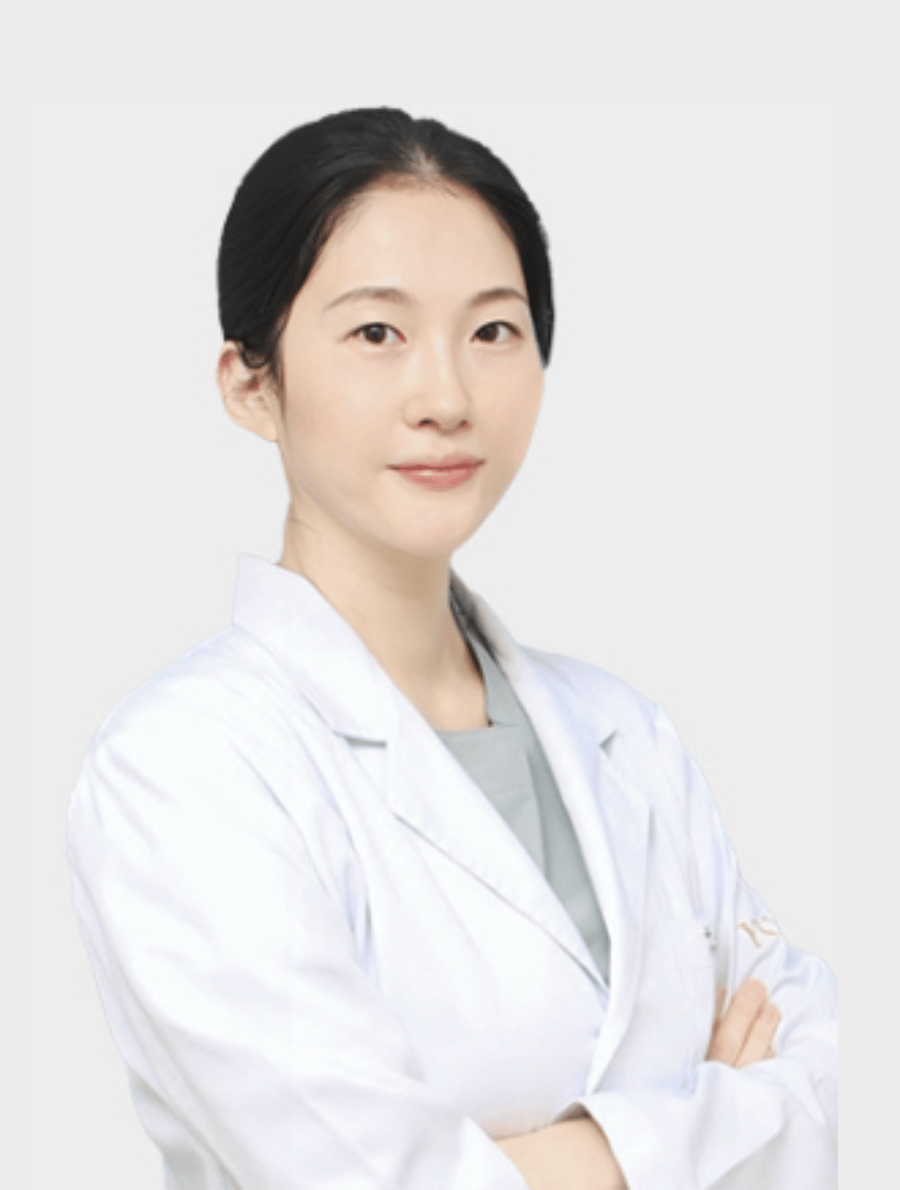
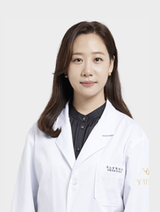
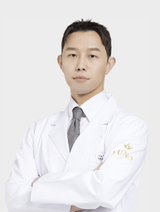
Dr. Son Shill Lee, board-certified anesthesiologist at YUNODr. Moon Sun Young, board-certified anesthesiologist at YUNO

Two board-certified anesthesiologists, always on-site

Dr. Son Shill Lee and Dr. Moon Sun Young oversee pre-operative assessment, 1:1 anesthesia care and real-time monitoring for every surgery. See the YUNO safety system →

Real patient results

Deviated Nose Surgery before & after

Results vary between individuals. Every photo is shared with patient consent and reflects the surgeon’s personalised plan.

View photo gallery →
FAQ

Deviated Nose Surgery questions, answered

Still unsure? Ask a surgeon directly — our English-speaking coordinators reply on WhatsApp.

What Is a Deviated Nose?
A deviated nose refers to a nose that is visibly misaligned or shifted away from the facial midline. The deviation may involve the nasal bones, cartilage, septum, or a combination of multiple structures. Some patients are born with a deviated nose, while others develop the condition after trauma, injury, previous surgery, or structural growth changes. The degree of deviation can vary significantly from one patient to another.
What Is Deviated Nose Surgery?
Deviated nose surgery is a corrective rhinoplasty procedure designed to straighten the nose, improve symmetry, and restore proper structural alignment. Depending on the patient's anatomy, treatment may involve reshaping nasal bones, correcting cartilage structures, addressing septal deviation, or performing comprehensive rhinoplasty techniques. The goal is to create a straighter and more balanced nose while preserving or improving nasal function.
Who Is a Good Candidate for Deviated Nose Surgery?
Deviated nose surgery may be suitable for patients who are concerned about a crooked nose, facial asymmetry, nasal obstruction, breathing difficulties, or previous trauma-related deformities. Candidates should be healthy and have realistic expectations regarding surgery. During consultation, YUNO Plastic Surgery Clinic evaluates nasal alignment, septal structure, facial proportions, breathing function, and overall treatment goals before developing a personalized surgical plan.
What is a deviated nose?
A deviated nose is a nose that appears crooked or shifted away from the center of the face. The condition may involve the nasal bones, cartilage structures, septum, or multiple components of the nose.
What causes a deviated nose?
Common causes include congenital structural differences, facial trauma, nasal injuries, septal deviation, and previous rhinoplasty procedures. The specific cause varies from patient to patient.
Who is a good candidate for deviated nose surgery?
Patients who are concerned about nasal asymmetry, crooked appearance, breathing difficulties, or trauma-related deformities may be candidates. A detailed consultation is necessary to determine the most appropriate treatment plan.
Can deviated nose surgery straighten a crooked nose?
Yes. One of the primary goals of surgery is to improve nasal alignment and facial symmetry. The degree of correction depends on the underlying anatomical structures involved.
Can deviated nose surgery improve breathing?
Yes. If a deviated septum or structural abnormality is contributing to airflow obstruction, corrective surgery may improve breathing function while enhancing appearance.
What is the difference between a deviated nose and a deviated septum?
A deviated nose refers to visible external misalignment, while a deviated septum refers to internal displacement of the nasal partition. Many patients have both conditions simultaneously.
Can previous trauma cause a crooked nose?
Yes. Nasal injuries are one of the most common causes of structural deviation and facial asymmetry. Surgical correction may restore both appearance and function.
Can deviated nose surgery be combined with rhinoplasty?
Yes. Deviated nose correction is often performed as part of a comprehensive rhinoplasty procedure. Additional refinements may include tip reshaping, bridge refinement, or nostril correction.
How long does deviated nose surgery take?
The duration depends on the complexity of the deviation and the corrections required. More advanced structural and functional corrections generally require additional operating time.
How long is recovery after deviated nose surgery?
Most swelling and bruising improve significantly within the first few weeks after surgery. Final refinement and stabilization continue over several months as healing progresses.
How long should international patients stay in Korea after deviated nose surgery?
Most international patients are advised to remain in Korea for approximately 10 to 14 days. This allows sufficient time for follow-up care, postoperative monitoring, and early recovery before returning home.
Are deviated nose surgery results permanent?
Deviated nose correction results are generally long-lasting because the underlying structures are surgically repositioned and stabilized. While natural aging continues, the structural improvements achieved during surgery are intended to remain stable.
Why choose YUNO Plastic Surgery Clinic for deviated nose surgery in Seoul?
YUNO Plastic Surgery Clinic customizes every crooked nose correction according to structural anatomy, facial proportions, breathing concerns, and aesthetic goals. The clinic focuses on achieving natural-looking alignment, improved function, facial harmony, and long-term structural stability.
Visit us

Book your Deviated Nose Surgery consultation

Location

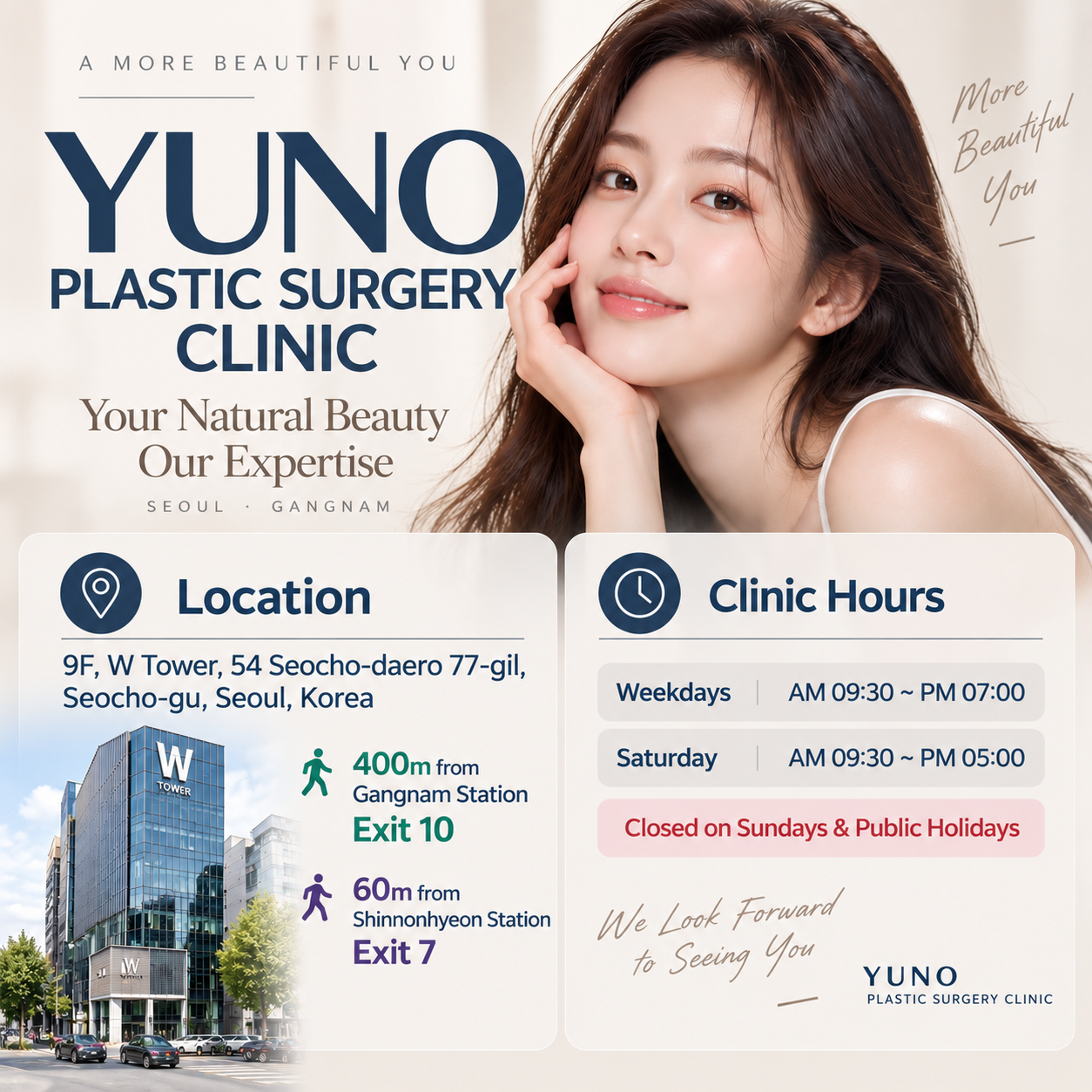
9F, W Tower, 54 Seocho-daero 77-gil, Seocho-gu, Seoul, Korea

400m from Gangnam Station Exit 10 · 60m from Sinnonhyeon Station Exit 7

Clinic Hours

Mon–Wed & Fri 09:30 – 19:00 · Thu 09:30 – 20:00 (Late Hours) · Sat 09:30 – 17:00

Closed Sundays & public holidays

This page is for general information and does not replace an in-person medical consultation. Suitability, risks and recovery differ for every patient and are discussed with your surgeon. Content medically reviewed by Dr. Kim Shin Young on October 2026.

Free consultation

Send your photos and goals — an English-speaking coordinator will reply and arrange a 1:1 review with Dr. Kim Shin Young or the right specialist for you.

Chat on WhatsApp → Call +82-10-2257-8670