What Is Revision Facelift Surgery?
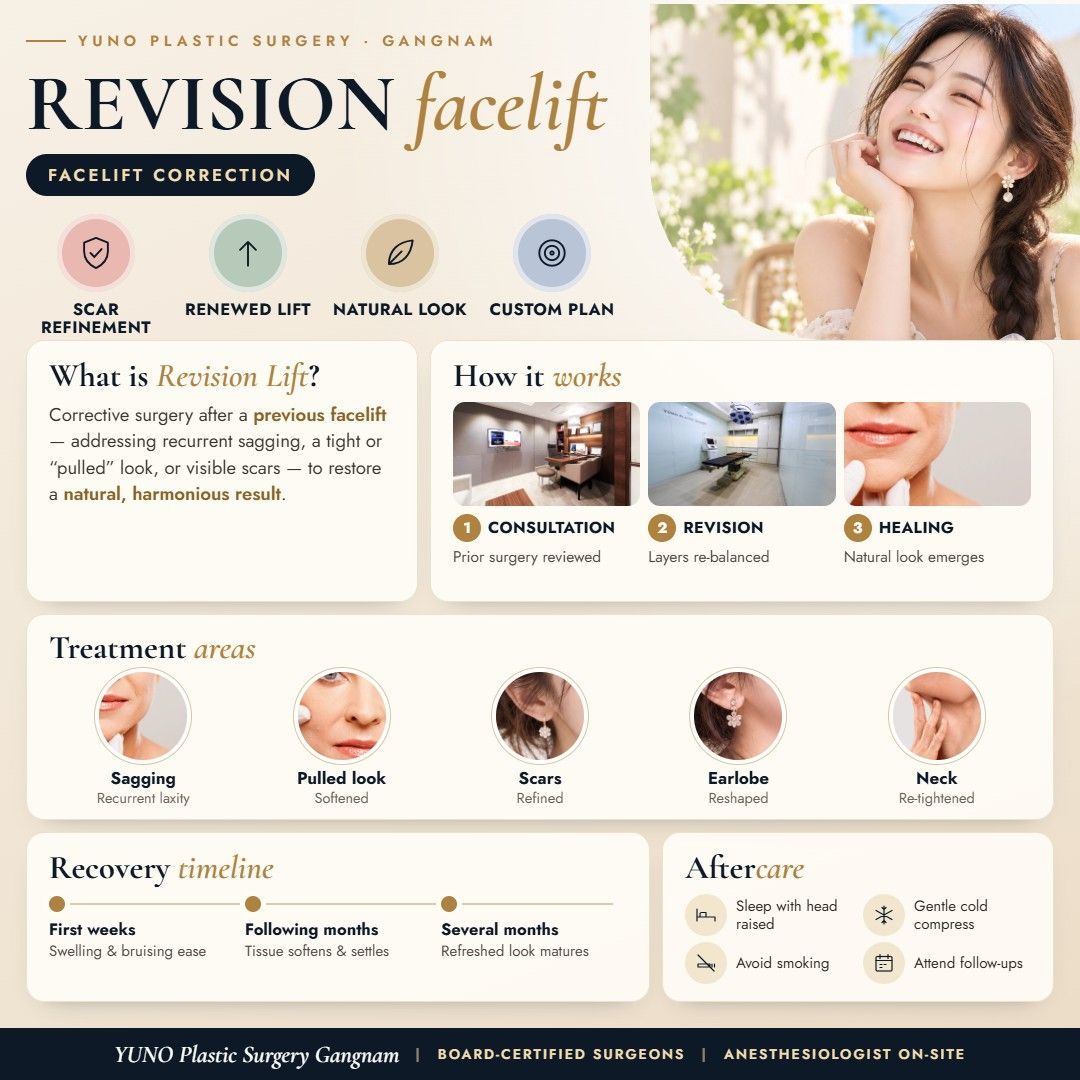
Revision facelift surgery is a secondary facelift procedure performed after a previous facelift operation. The procedure may address: Recurrent facial sagging Incomplete facelift correction Facial asymmetry Visible scars Skin irregularities Unnatural appearance Residual jowls Neck laxity Midface descent The goal is to improve facial harmony while preserving natural expressions and movement.
Who Is a Good Candidate for Revision Facelift?
Patients may be suitable candidates if they: Previously underwent facelift surgery Experience recurrent facial sagging Are dissatisfied with prior results Have facial asymmetry Have visible facelift-related deformities Desire further rejuvenation Are in good overall health Have realistic expectations A detailed consultation is necessary to determine the most appropriate revision strategy.
Why Do Patients Seek Revision Facelift Surgery?
Even after a successful facelift, the aging process continues. Patients often seek revision procedures years later to maintain facial rejuvenation. Some patients feel their previous procedure did not adequately address facial aging concerns. Over-tightening or improper tissue positioning may create an unnatural look. Differences in facial contour or healing can contribute to asymmetrical outcomes. Residual laxity in the jawline and neck area is a common reason for revision surgery.
What is revision facelift surgery?
Revision facelift surgery is a secondary procedure performed after a previous facelift to improve or correct existing results. It may address recurrent sagging, asymmetry, visible scars, contour irregularities, or dissatisfaction with a prior outcome.
Why is revision facelift surgery more difficult than a primary facelift?
Revision surgery often involves scar tissue, altered anatomy, tissue thinning, and previous surgical changes that can make the procedure more technically demanding. This is why surgeon experience and individualized treatment planning are particularly important in revision cases.
How long should I wait before considering a revision facelift?
The appropriate timing varies depending on healing, tissue condition, and the specific concerns being addressed. In many cases, patients are advised to allow adequate healing from the original surgery before considering revision procedures, unless a significant issue requires earlier correction.
Can a revision facelift look natural?
Yes. Modern revision facelift techniques focus on restoring natural facial contours and movement rather than creating an overly tight appearance. Proper tissue repositioning and individualized planning are key factors in achieving natural-looking outcomes.
Can a revision facelift fix asymmetry?
Many forms of facial asymmetry can be improved during revision surgery. However, the degree of correction depends on the underlying anatomy, tissue quality, and the nature of the previous procedure.
Is a deep plane facelift useful for revision cases?
In selected patients, deep plane facelift techniques may provide improved tissue repositioning and more comprehensive rejuvenation. The decision depends on facial anatomy, prior surgical history, and the goals of the revision procedure.
Why do patients travel to Seoul for revision facelift surgery?
Seoul is known for advanced facial rejuvenation techniques, experienced facelift surgeons, modern medical facilities, and comprehensive postoperative care. Many international patients choose Korea specifically for complex revision and corrective facial surgery.