What is rhinoplasty?
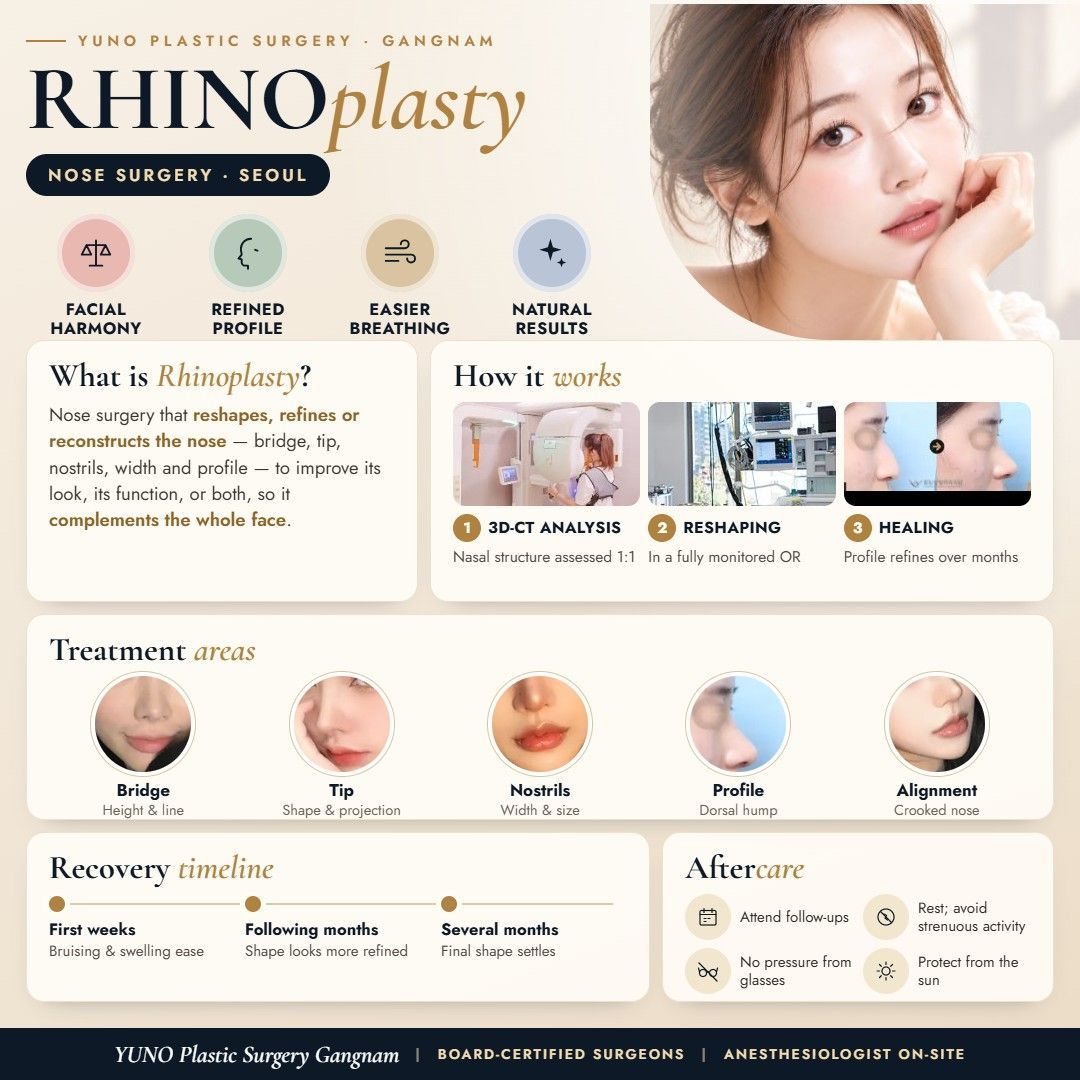
Rhinoplasty is a surgical procedure designed to improve the appearance and/or function of the nose. The surgery may address bridge height, tip shape, nostril size, profile contour, asymmetry, and breathing-related concerns.
Who is a good candidate for rhinoplasty?
Patients seeking cosmetic refinement, improved facial balance, correction of asymmetry, or functional breathing improvement may be candidates. A consultation is necessary to determine the most appropriate surgical approach.
Can rhinoplasty improve breathing?
Yes. Functional rhinoplasty can correct structural issues that affect nasal airflow and breathing. Cosmetic and functional improvements can often be performed during the same procedure.
Can rhinoplasty create natural-looking results?
Yes. Modern rhinoplasty focuses on creating balanced results that complement the patient's facial features. Surgical planning is individualized to avoid an overdone or artificial appearance.
What is the difference between open and closed rhinoplasty?
Closed rhinoplasty
uses internal incisions only, while open rhinoplasty includes a small incision on the columella. The most suitable technique depends on the complexity of the case and the corrections required.
What is revision rhinoplasty?
Revision rhinoplasty
is performed after a previous nose surgery to address aesthetic, structural, or functional concerns. These cases are often more complex and require advanced surgical planning.
Can rhinoplasty correct a crooked nose?
Yes. Rhinoplasty can improve nasal alignment and symmetry depending on the underlying cause. Treatment planning is customized according to the patient's anatomy.
Can rhinoplasty reduce a dorsal hump?
Yes.
Dorsal hump
reduction is one of the most common rhinoplasty procedures. The goal is to create a smoother and more balanced nasal profile.
How long does rhinoplasty surgery take?
The duration depends on the complexity of the procedure and whether revision or functional correction is required. More advanced cases generally require additional operating time.
Will rhinoplasty leave visible scars?
Many rhinoplasty procedures utilize hidden internal incisions. If open rhinoplasty is performed, the external incision is typically placed in a discreet location and becomes less noticeable over time.
How long is recovery after rhinoplasty?
Most swelling and bruising improve substantially during the first several weeks after surgery. Final nasal refinement continues over several months as healing progresses.
How long should international patients stay in Korea after rhinoplasty?
Most international patients are advised to remain in Korea for approximately 10 to 14 days. This allows sufficient time for surgery, follow-up appointments, and recovery monitoring before traveling home.
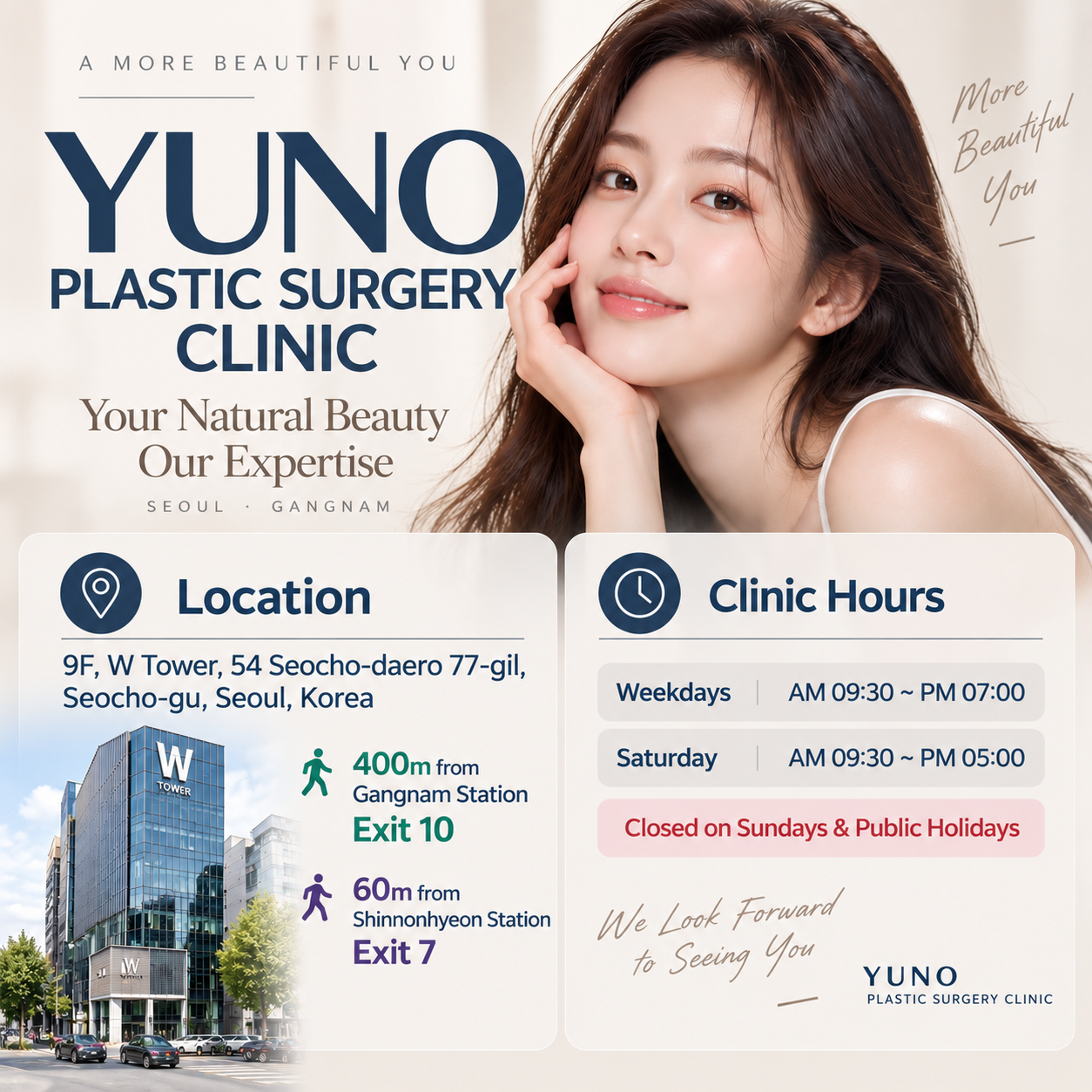
Why choose YUNO Plastic Surgery Clinic for rhinoplasty in Seoul?
YUNO Plastic Surgery Clinic customizes every rhinoplasty procedure according to nasal anatomy, facial proportions, skin characteristics, and patient goals. The clinic focuses on achieving natural-looking results, maintaining structural stability, and creating balanced facial harmony tailored to each individual.