Saddle Nose Surgery in Gangnam, Seoul
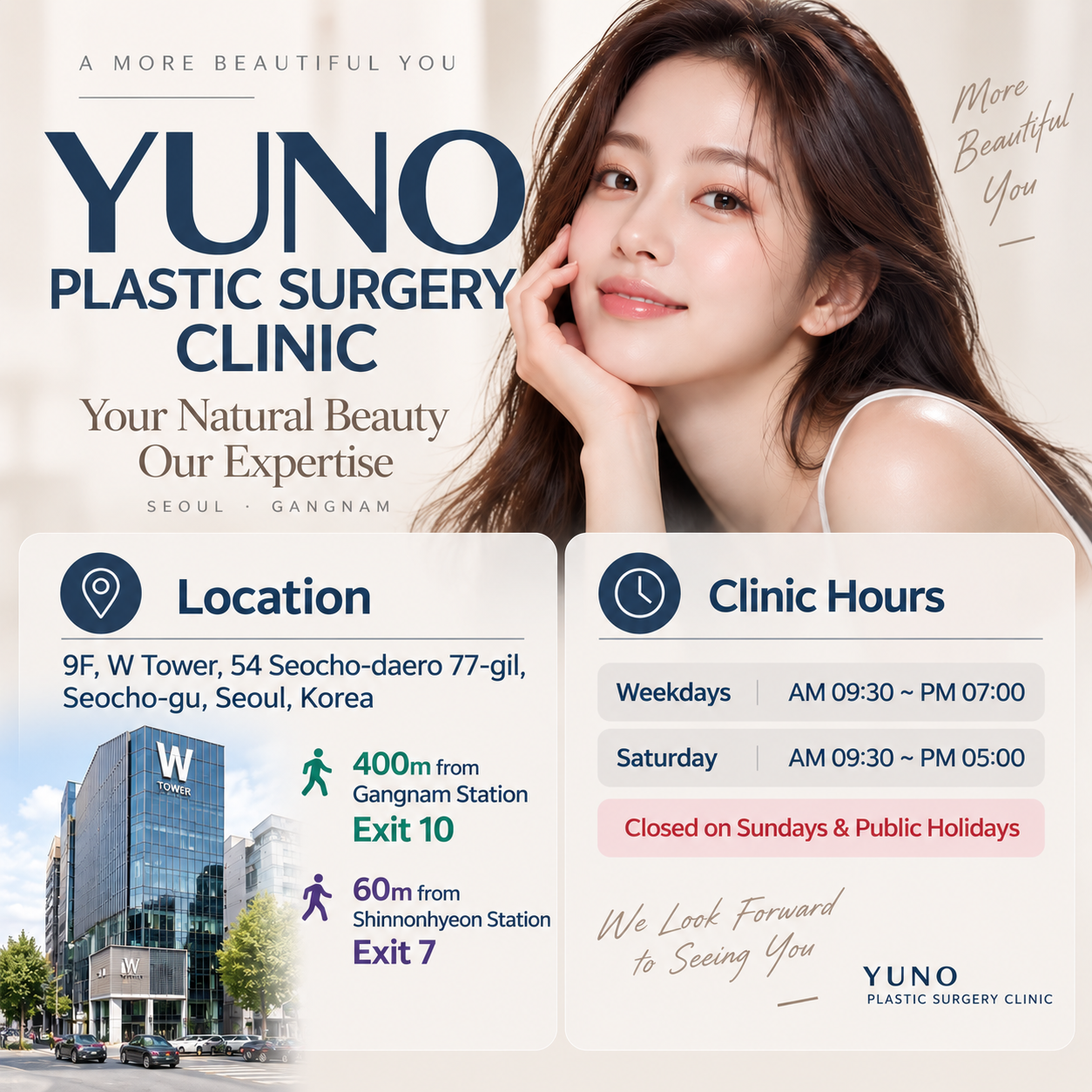
YUNO Plastic Surgery Clinic
Saddle nose surgery in Seoul, Korea is a specialized reconstructive rhinoplasty procedure designed to restore nasal height, structural support, and facial balance in patients with a collapsed nasal bridge. At YUNO Plastic Surgery Clinic, saddle nose correction is customized according to the severity of the deformity, nasal anatomy, and aesthetic goals to achieve functional improvement and natural-looking results.
Saddle Nose Surgery in Seoul Korea
A saddle nose deformity occurs when the nasal bridge collapses, creating a depressed or sunken appearance in the middle portion of the nose. In addition to affecting facial aesthetics, severe cases may also compromise nasal function and breathing.
At YUNO Plastic Surgery Clinic, saddle nose correction focuses on restoring structural support while improving facial harmony. Every treatment plan is individually designed to rebuild the nasal framework, improve profile balance, and achieve stable long-term outcomes.
What Is a Saddle Nose Deformity?
A saddle nose deformity is characterized by loss of height and support in the nasal bridge. The collapse creates a concave appearance when viewed from the side and can significantly affect overall facial proportions.
The condition may develop due to trauma, previous rhinoplasty, infection, congenital conditions, autoimmune diseases, cartilage loss, or structural weakening of the nose. The severity can range from mild bridge depression to significant nasal collapse.
What Is Saddle Nose Surgery?
Saddle nose surgery is a reconstructive rhinoplasty procedure designed to rebuild and strengthen the nasal framework. The surgery typically involves structural grafting techniques to restore bridge height, support the nasal dorsum, and improve both appearance and function.
Depending on the degree of collapse, cartilage grafts, structural reinforcement techniques, and advanced reconstruction methods may be necessary. Treatment is customized according to the patient's anatomy and reconstructive needs.
Who Is a Good Candidate for Saddle Nose Surgery?
Patients with a collapsed nasal bridge, loss of nasal height, nasal deformity following trauma, complications from previous rhinoplasty, or structural nasal weakness may be candidates for saddle nose correction.
A detailed consultation and examination are necessary to determine the underlying cause of the deformity and identify the most appropriate reconstruction strategy. Surgical planning focuses on both aesthetics and long-term structural stability.
Common Causes of Saddle Nose Deformity
Previous Rhinoplasty
Over-resection of cartilage or structural support during previous nose surgery can result in bridge collapse and saddle nose deformity.
Nasal Trauma
Injuries to the nose may damage cartilage and supporting structures, leading to progressive collapse of the nasal bridge.
Congenital Structural Deficiencies
Some patients are born with underdeveloped or weakened nasal support structures that contribute to saddle nose appearance.
Infection or Tissue Damage
Severe infections and tissue loss can weaken the nasal framework and contribute to bridge collapse.
Autoimmune Conditions
Certain medical conditions may affect cartilage integrity and contribute to structural nasal deformities.
Benefits of Saddle Nose Reconstruction
One of the primary benefits of surgery is restoration of nasal support and profile balance. Rebuilding the nasal bridge can significantly improve facial proportions and overall appearance.
Patients may also experience functional improvement when structural support is restored. Strengthening the nasal framework can improve airflow and help address breathing-related concerns in selected cases.
Structural Grafting in Saddle Nose Surgery
Cartilage Grafting
Cartilage grafts are frequently used to rebuild the collapsed nasal bridge and provide long-term structural support.
Nasal Framework Reconstruction
Advanced reconstructive techniques may be necessary to restore proper nasal projection, height, and stability.
Revision Rhinoplasty Techniques
Many saddle nose cases involve previous surgery and require complex revision rhinoplasty approaches to correct structural deficiencies.
Recovery After Saddle Nose Surgery
Recovery varies depending on the severity of the deformity and the complexity of reconstruction. Patients may experience swelling, bruising, congestion, and temporary discomfort during the healing period.
As swelling resolves, the reconstructed nasal framework becomes more defined. Final results continue to improve over several months as tissues heal and settle into their new position.
Why Choose YUNO Plastic Surgery Clinic for Saddle Nose Surgery in Seoul?
YUNO Plastic Surgery Clinic specializes in individualized rhinoplasty and reconstructive nasal surgery. Every saddle nose correction procedure is planned according to the specific structural deficiencies and aesthetic goals of the patient.
International patients choose YUNO Plastic Surgery Clinic for advanced reconstructive expertise, personalized consultations, and comprehensive postoperative care. The clinic focuses on restoring nasal support, improving facial harmony, and achieving stable long-term outcomes.
Frequently Asked Questions
What is a saddle nose deformity?
A saddle nose deformity occurs when the nasal bridge loses structural support and develops a sunken appearance. The condition can affect both nasal aesthetics and breathing function depending on severity.
Who is a good candidate for saddle nose surgery?
Patients with a collapsed nasal bridge due to trauma, previous rhinoplasty, congenital conditions, infection, or cartilage loss may be candidates. A consultation is necessary to evaluate the cause and severity of the deformity.
Can saddle nose deformity affect breathing?
Yes. In some cases, loss of structural support can contribute to nasal obstruction and airflow problems. Functional concerns are evaluated during the consultation process.
What causes a saddle nose deformity?
Common causes include previous rhinoplasty, trauma, congenital structural deficiencies, infection, autoimmune conditions, and cartilage loss. Treatment planning depends on the underlying cause and degree of collapse.
How is saddle nose surgery performed?
Surgery typically involves reconstruction of the nasal framework using cartilage grafts and structural support techniques. The exact method is customized according to the patient's anatomy and reconstructive requirements.
What type of graft is used for saddle nose reconstruction?
Cartilage grafts are commonly used to rebuild the nasal bridge and restore support. The graft source and technique depend on the complexity of the deformity and surgical goals.
Is saddle nose surgery considered revision rhinoplasty?
Many saddle nose cases occur after previous rhinoplasty and are therefore considered revision rhinoplasty procedures. However, saddle nose deformity can also occur due to trauma, congenital conditions, or other causes.
Can saddle nose surgery improve facial balance?
Yes. Restoring nasal bridge height and projection can significantly improve profile aesthetics and overall facial harmony. The goal is to create a nose that looks balanced with the rest of the face.
How long does saddle nose surgery take?
The duration depends on the severity of the deformity and the complexity of reconstruction required. Advanced structural reconstruction cases often require additional operating time.
How long is recovery after saddle nose surgery?
Most bruising and swelling improve substantially during the first several weeks after surgery. Final refinement continues over many months as the reconstructed structures heal and stabilize.
How long should international patients stay in Korea after saddle nose surgery?
Most international patients are advised to remain in Korea for approximately 10 to 14 days, although more complex reconstructive cases may require a longer stay. This allows sufficient time for follow-up appointments and recovery monitoring.
Are saddle nose surgery results permanent?
Saddle nose reconstruction is designed to provide long-term structural support and correction. While natural aging continues, the reconstructed framework is intended to remain stable over time.
Why choose YUNO Plastic Surgery Clinic for saddle nose surgery in Seoul?
YUNO Plastic Surgery Clinic customizes every saddle nose correction procedure according to nasal anatomy, structural deficiencies, functional concerns, and aesthetic goals. The clinic focuses on restoring nasal support, improving facial harmony, and achieving durable, natural-looking reconstructive outcomes.